Introduction
The bedroom is your sanctuary — the one room in your home dedicated entirely to rest, recovery, and intimacy. In feng shui, the bedroom governs health, relationships, and personal energy. Getting its layout, colour, and placement right can have a profound impact on the quality of your sleep and the harmony of your relationships. Here’s a practical feng shui guide tailored to Singapore homes.
Bed Placement: The Command Position
The most fundamental feng shui principle for the bedroom is the command position. Your bed should be placed so that you can see the bedroom door from where you sleep, but your feet should not point directly at the door (known as the “coffin position” in feng shui, as it mirrors how bodies are carried out feet-first).
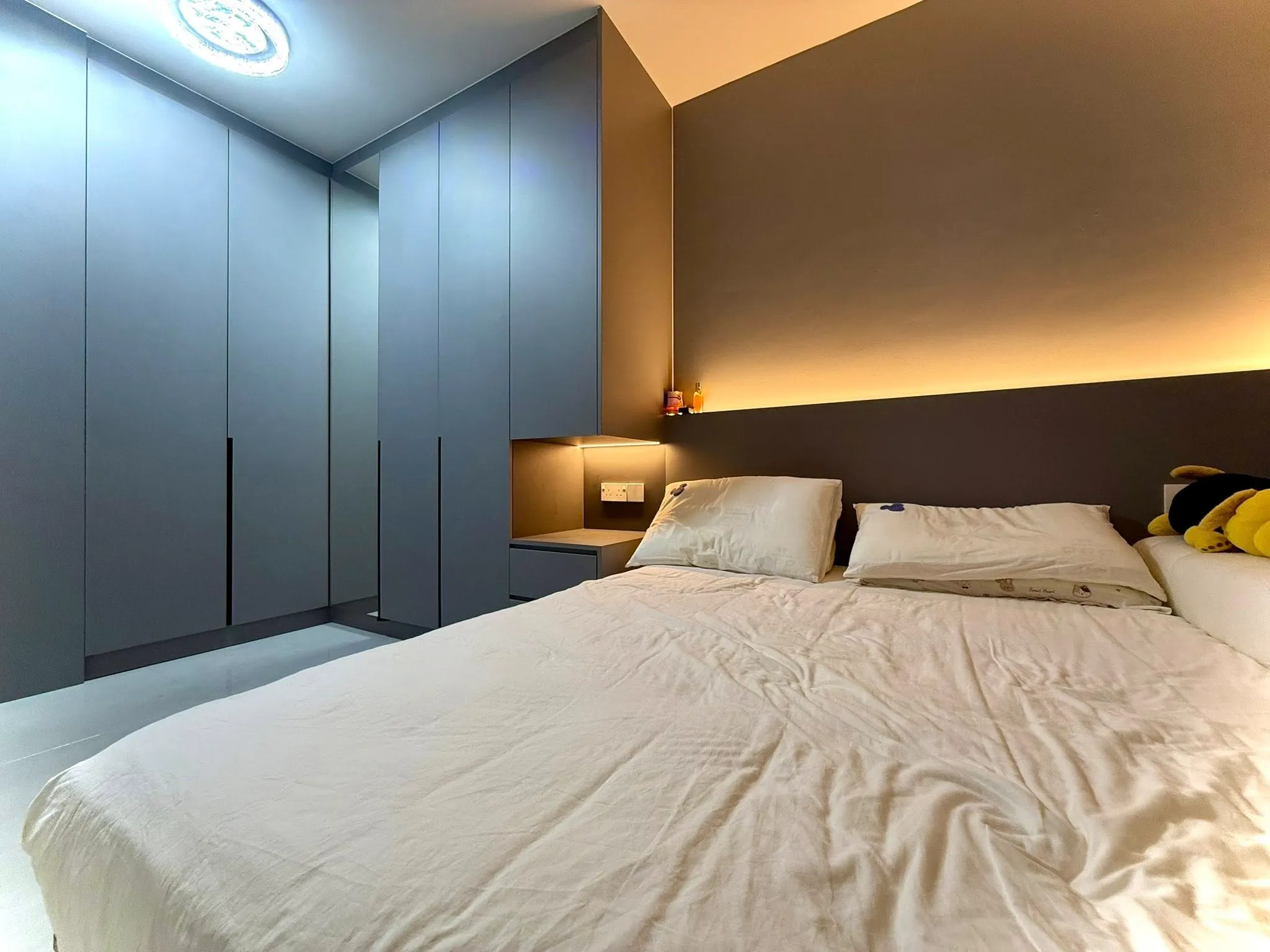
Ideally, the bed is positioned diagonally opposite the door, against a solid wall — never floating in the centre of the room or placed under a window. A solid wall behind the headboard provides symbolic support and stability in life.
In compact HDB bedrooms, achieving the command position can require some creative furniture planning. Our team at Empire Works regularly incorporates feng shui principles into bedroom layout planning during renovation. For a broader overview of feng shui in the home, read our feng shui home design guide for Singapore 2026.
The Headboard: Never Skip It
A solid, sturdy headboard is non-negotiable in feng shui. It represents backing and support — in your career, relationships, and health. Upholstered headboards in neutral or earthy tones are ideal. Avoid headboards made entirely of metal or those with bars (which symbolise imprisonment) and headboards with cutouts or holes (which symbolise weakness).
Mirrors in the Bedroom: Proceed With Caution
Mirrors are one of the most debated items in bedroom feng shui. The general guidance is to avoid placing mirrors facing the bed. Mirrors are believed to be highly active, reflective energies — excellent for activating spaces during waking hours, but disruptive to the passive, restorative energy needed for sleep.
If you need a full-length mirror in the bedroom, position it inside a wardrobe door so it can be concealed at night. This is one reason built-in wardrobes with mirrored panels are so popular in feng shui-conscious Singapore homes.
Colours for the Bedroom
Bedroom colours should promote rest, calm, and connection. Feng shui-recommended palettes for bedrooms include:
- Soft earth tones: Beige, cream, warm taupe — grounding and stabilising
- Gentle greens: Sage, olive — healing and growth energy
- Muted blues: Pale sky or slate — calming, promotes rest
- Blush and terracotta: Warm, romantic tones that support relationship energy
Avoid overly bright or stimulating colours (red, orange, bold yellow) on large surfaces — these fire energies are too activating for a space meant for rest.
What NOT to Keep in the Bedroom
Feng shui is as much about what you remove as what you add. For a healthy bedroom energy:
- Electronics: TVs, computers, and exercise equipment bring active, stimulating energy into a rest space. Remove or conceal where possible.
- Work items: Laptops and work files carry career stress energy into your sleep environment.
- Clutter under the bed: Storage under the bed is common in Singapore’s compact flats, but feng shui advises keeping this area clear to allow energy to flow freely. If you must store there, keep items flat, neatly organised, and avoid storing old memories or emotionally charged items.
- Dead plants or dried flowers: These carry stagnant energy. Keep only healthy, living plants — or skip them entirely in the bedroom.
Feng Shui for Couples: Enhancing Relationship Energy
The bedroom is the feng shui zone for love and partnership. To support relationship harmony:
- Ensure equal space on both sides of the bed — avoid pushing one side against the wall
- Use pairs of items in décor (two bedside tables, two lamps) to symbolise partnership
- Place art depicting pairs, gentle landscapes, or loving imagery rather than solo figures or abstract art with aggressive energy
- Keep the relationship corner (far right from the bedroom door) activated with soft lighting, rose quartz crystals, or romantic imagery
Renovation and Feng Shui: Better Together
The best time to incorporate feng shui is during a renovation — when layouts can be optimised, built-in furniture can be positioned correctly, and colours can be chosen from the start. Empire Works works with homeowners to integrate feng shui principles seamlessly into their bedroom renovation designs.
Ready to create a bedroom that supports your wellbeing and relationships? Contact Empire Works for a free design consultation. You can also explore our renovation packages for full-home solutions.