

Introduction
Flooring is one of the most impactful renovation decisions you’ll make — it covers every square metre of your home and sets the tone for everything above it. In Singapore’s HDB flats, where humidity, foot traffic, and compact layouts are realities, choosing the right flooring material requires careful thought. This guide compares the three most popular options — vinyl, timber, and tiles — so you can make an informed decision.
Option 1: Luxury Vinyl Plank (LVP)
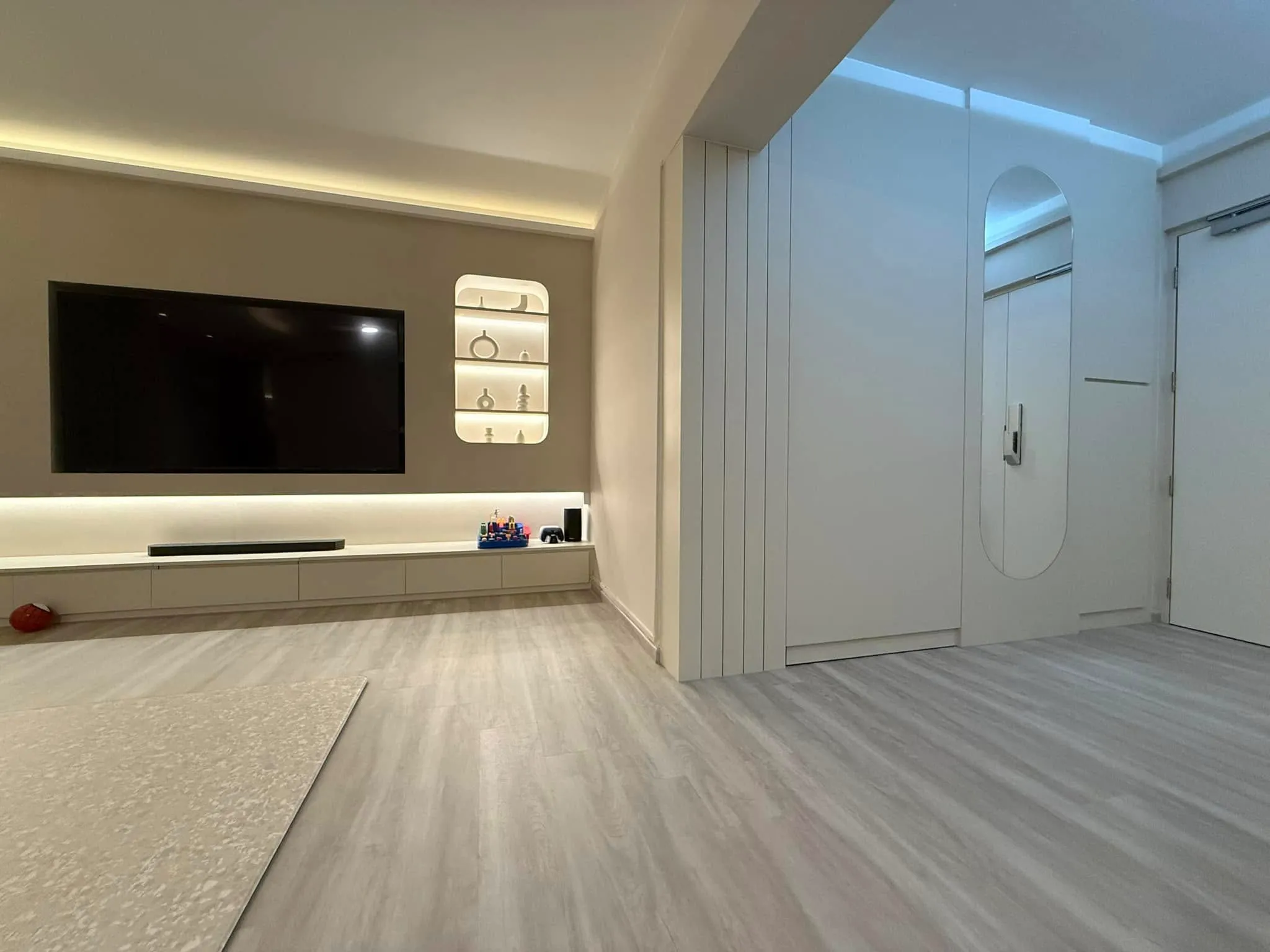
Luxury vinyl plank flooring has become the most popular flooring choice for Singapore HDB flats in recent years — and for good reason.
Pros:
- Highly resistant to moisture and humidity — ideal for Singapore’s climate
- Excellent durability (wear layer of 0.3mm–0.5mm for residential use)
- Realistic wood and stone finishes that are virtually indistinguishable from the real thing
- Comfortable underfoot and warmer than tiles
- DIY-friendly click-lock installation, though professional installation is recommended
- Significantly cheaper than timber: typically $4–$8 per sqft installed
Cons:
- Cannot be sanded and refinished (unlike real timber)
- Prone to scratching from heavy furniture or sharp objects
- Not as prestigious as solid timber for resale value
Best for: Budget-conscious homeowners who want the look of timber without the cost or maintenance. Also ideal for households with children or pets.
Option 2: Timber Flooring (Engineered Wood)
Solid timber is rarely recommended for Singapore homes due to the humidity — it warps, gaps, and swells over time. Engineered wood, however, is a stable, genuine timber option that performs well in Singapore’s climate.
Pros:
- Genuine timber surface layer — warm, natural, premium feel
- Can be sanded and refinished 1–3 times depending on the wear layer thickness
- Strong resale appeal and perceived luxury
- More stable than solid timber in humid conditions
Cons:
- Significantly more expensive than vinyl: $8–$18 per sqft installed
- Still susceptible to moisture damage in wet areas — not suitable for bathrooms
- Requires more maintenance (no wet mopping, must be kept dry)
- Heavier and harder to replace if damaged
Best for: Homeowners who value the authentic feel of timber and are prepared for the higher cost and maintenance.
Option 3: Homogeneous and Porcelain Tiles
Tiles are the default flooring in most HDB flats — the basic homogeneous tiles that come with the flat are functional but rarely exciting. Upgrading to premium porcelain or large-format tiles is a popular renovation choice.
Pros:
- Extremely durable and long-lasting
- Easy to clean and fully waterproof — ideal for kitchens and bathrooms
- Wide variety of finishes: marble-look, concrete-look, terrazzo, wood-effect
- Stays cool underfoot — welcome in Singapore’s heat
Cons:
- Hard and cold underfoot — less comfortable for extended standing
- Heavy hacking and debris if replacing existing tiles
- Grout lines require maintenance (consider our epoxy grouting service for stain-resistant joints)
- Mid-range cost: $5–$12 per sqft installed depending on tile quality and hacking
Best for: Wet areas (kitchen, bathrooms), homeowners who prefer a cool, easy-maintenance surface, or those going for a modern, minimalist aesthetic.
Overlay vs. Full Hack: Which Makes More Sense?
If your existing floor tiles are in good condition (no hollow tiles, no cracks, no moisture issues), overlaying with vinyl or new tiles is significantly cheaper and faster. Hacking adds cost, noise, and time.
If tiles are hollow, damaged, or there are waterproofing concerns, a full hack is the right approach — doing the job properly now avoids much larger problems later. Our tiling contractors can assess your existing floor and advise accordingly.
HDB Flooring Rules to Know
HDB requires that all flooring materials meet a minimum Impact Insulation Class (IIC) of 45 — this is a sound insulation requirement to minimise noise transfer to the unit below. Ensure your flooring supplier can provide an IIC rating certificate. Most quality vinyl and engineered timber products meet this standard, but always verify.
For all works involving hacking of existing floor finishes, an HDB renovation permit is required. Our HDB renovation permit guide explains what’s required and what to expect.
Our Recommendation for Most HDB Homeowners
For the living room, bedrooms, and study: luxury vinyl plank for budget-conscious buyers; engineered timber for those who want premium aesthetics. For kitchen and bathrooms: porcelain tiles — the only truly waterproof option. For the dining area: either tiles (practical) or vinyl with a quality wear layer.
Get Expert Flooring Advice From Empire Works
Choosing the right flooring is something our team does every day — and we’re happy to share our expertise with you. From professional tile installation to full vinyl overlay projects, Empire Works handles all flooring types with care and precision.
Ready to upgrade your HDB floors? Contact us for a free consultation, or explore our renovation packages which include flooring as part of a complete renovation solution. Read what our clients say about us on our reviews page — rated 4.9 stars from over 157 satisfied homeowners.


