Renovation cost is where most homeowners get it wrong.
They either underestimate and run out of budget halfway, or overpay because they don’t understand what they’re being charged for.
If you’re renovating a flat under the Housing & Development Board in Singapore, you need a clear breakdown of where your money actually goes.
This isn’t about “cheap renovation.”
It’s about controlled spending with predictable outcomes.
What Does HDB Renovation Cost in Singapore?
For 2026, realistic renovation ranges:
- 3-Room HDB: $25,000 – $45,000
- 4-Room HDB: $35,000 – $70,000
- 5-Room HDB: $50,000 – $100,000+
If someone quotes you far below this range, something is missing.
If it’s far above, you’re likely over-specifying or overpaying.
Where Your Renovation Budget Actually Goes
Most homeowners think they’re paying for “design.”
They’re not.
They’re paying for execution.
Carpentry (30–40%)
The biggest cost component.
- Kitchen cabinets
- Wardrobes
- TV consoles
- Storage systems
Custom carpentry eats budget fast because it’s labour-intensive and material-heavy.
Hacking & Masonry (10–20%)
This includes:
- Wall hacking
- Tiling
- Floor works
Costs increase if you:
- Change layout
- Replace all flooring
- Redo bathrooms fully
- Electrical & Lighting (10–15%)
Often underestimated.
- New power points
- Lighting design
- Wiring upgrades
Poor planning here leads to long-term inconvenience.
Plumbing (5–10%)
Mostly for:
- Kitchen upgrades
- Bathroom renovations
- Pipe rerouting
Hidden costs appear when old piping systems need replacement.
Painting & Finishing (5–10%)
Looks simple. It’s not.
Good finishing determines whether your house looks premium or cheap.
The Real Cost Drivers Most People Ignore
This is where budgets get destroyed.
1. Over-Customisation
You don’t need custom carpentry everywhere.
Mix:
- Built-ins where necessary
- Loose furniture where possible
Otherwise, you’re paying premium for things that don’t need to be permanent.
2. Material Upgrades Without ROI
Upgrading everything to “premium” sounds smart.
It’s not.
Some upgrades matter:
- Kitchen surfaces
- Bathroom fittings
Some don’t:
- Hidden cabinet interiors
- Decorative panels
Spend where it affects daily use.
3. Poor Planning = Rework Cost
Changing decisions mid-renovation:
- Adds labour cost
- Delays timeline
- Wastes materials
This is one of the biggest hidden expenses.
Smart Budget Allocation Strategy
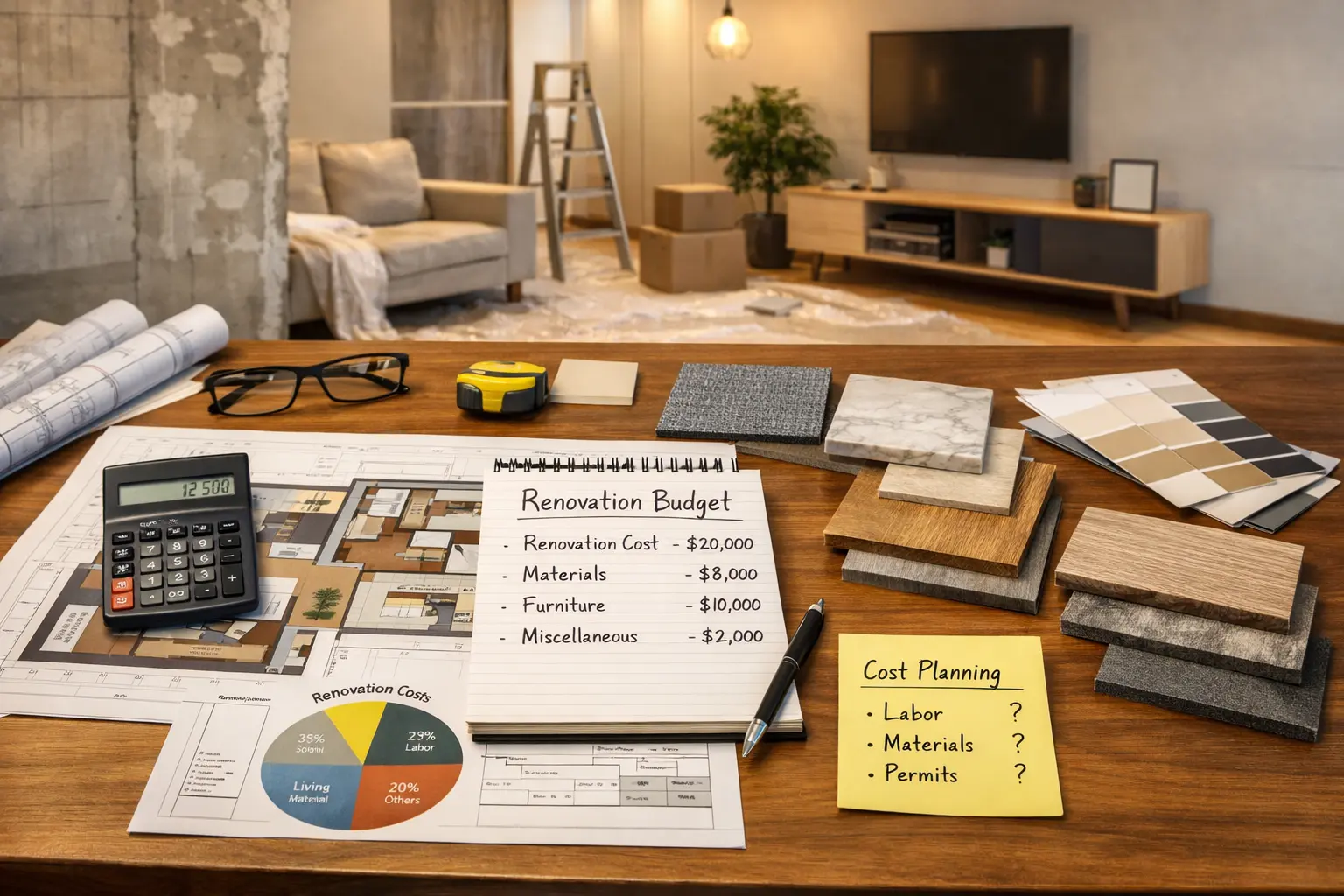
If you want control, use this structure:
- 40% Carpentry
- 20% Masonry & flooring
- 15% Electrical
- 10% Plumbing
- 10% Finishing
- 5% Buffer
That last 5% is non-negotiable.
If you don’t plan for it, unexpected costs will hit you anyway.
How Empire Works Controls Renovation Costs
Most contractors react to problems.
Empire Works plans ahead to eliminate them.
Cost control comes from:
- Detailed pre-renovation planning
- Transparent quotation breakdown
- Material recommendations based on usage
- Avoiding unnecessary custom work
This reduces:
- Rework
- Delays
- Budget overruns
Final Thoughts
Renovation cost isn’t random.
It’s predictable — if you understand the structure behind it.
Most homeowners lose money because:
- They chase aesthetics first
- They don’t question quotations
- They underestimate execution complexity
If you approach renovation like a system instead of a shopping list, you stay in control.
And that’s the difference between a smooth project and a financial mess.