The Floor You Choose Will Be There Every Single Day
In a BTO flat renovation, flooring is one of the first permanent decisions you lock in. Unlike furniture or paint, which can be changed without major disruption, flooring overlays or replacements involve either tiling the existing surface or hacking it up entirely and starting again. The floor you choose at renovation time is the floor you will live with for the next ten to fifteen years, through every phase of life that happens in that flat.
The decision is simpler than the material market makes it look. Here is what actually matters.
What BTO Flats Come With
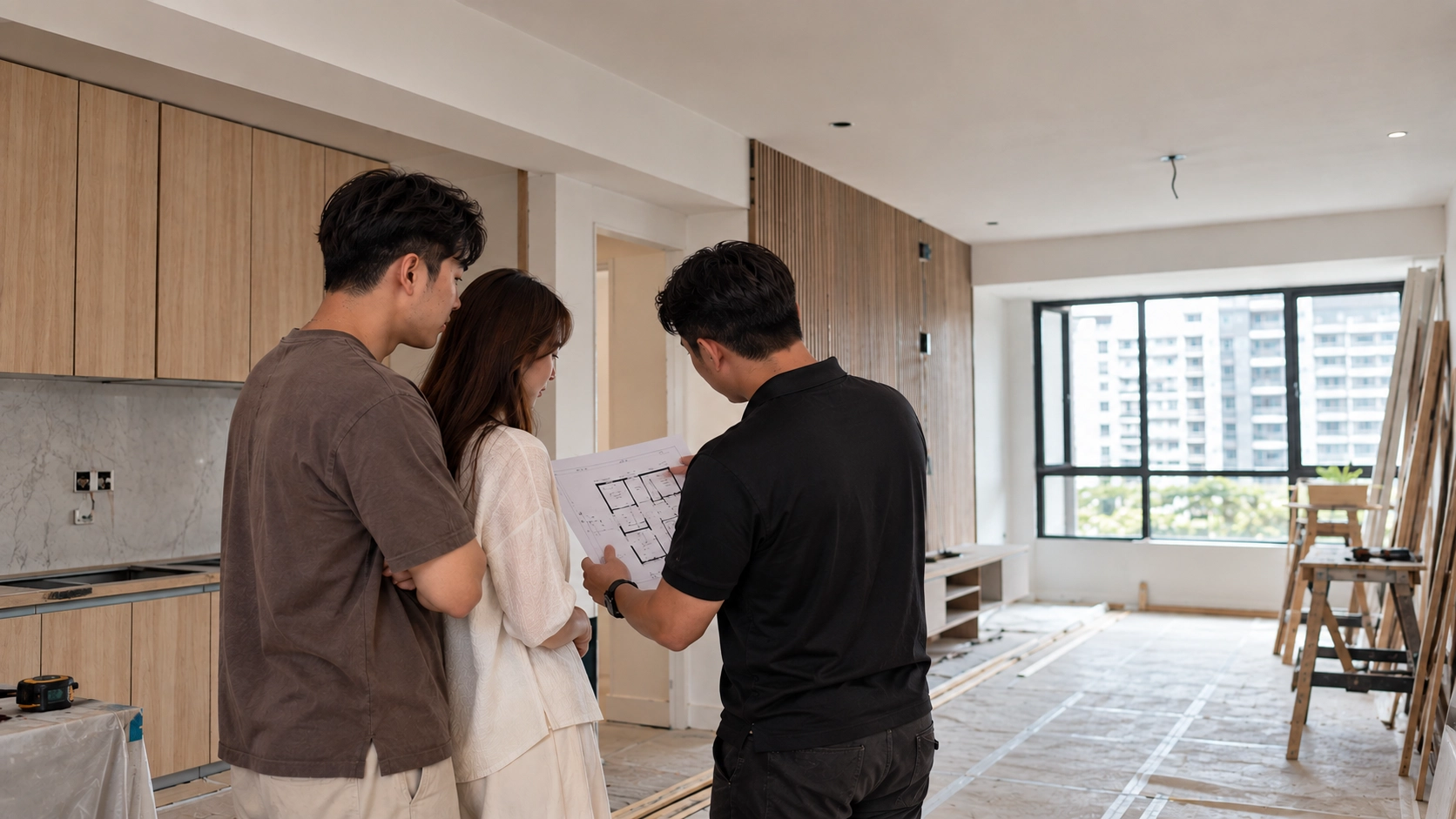
HDB BTO flats come with a standard finish: homogeneous floor tiles in the living room and bedrooms, wall tiles in the bathrooms and kitchen and a basic painted finish on walls. The tiles are functional and durable but they are generic. Most new BTO owners want to change at least the living room and bedroom flooring to something that feels more like a home they chose rather than a flat they were assigned.
The good news is that BTO tiles are generally in good condition and properly bonded. This means overlay is almost always viable without a full hack, which keeps the cost and disruption of a flooring upgrade significantly lower than in older resale flats.
Vinyl Plank Flooring: Why It Dominates BTO Renovations
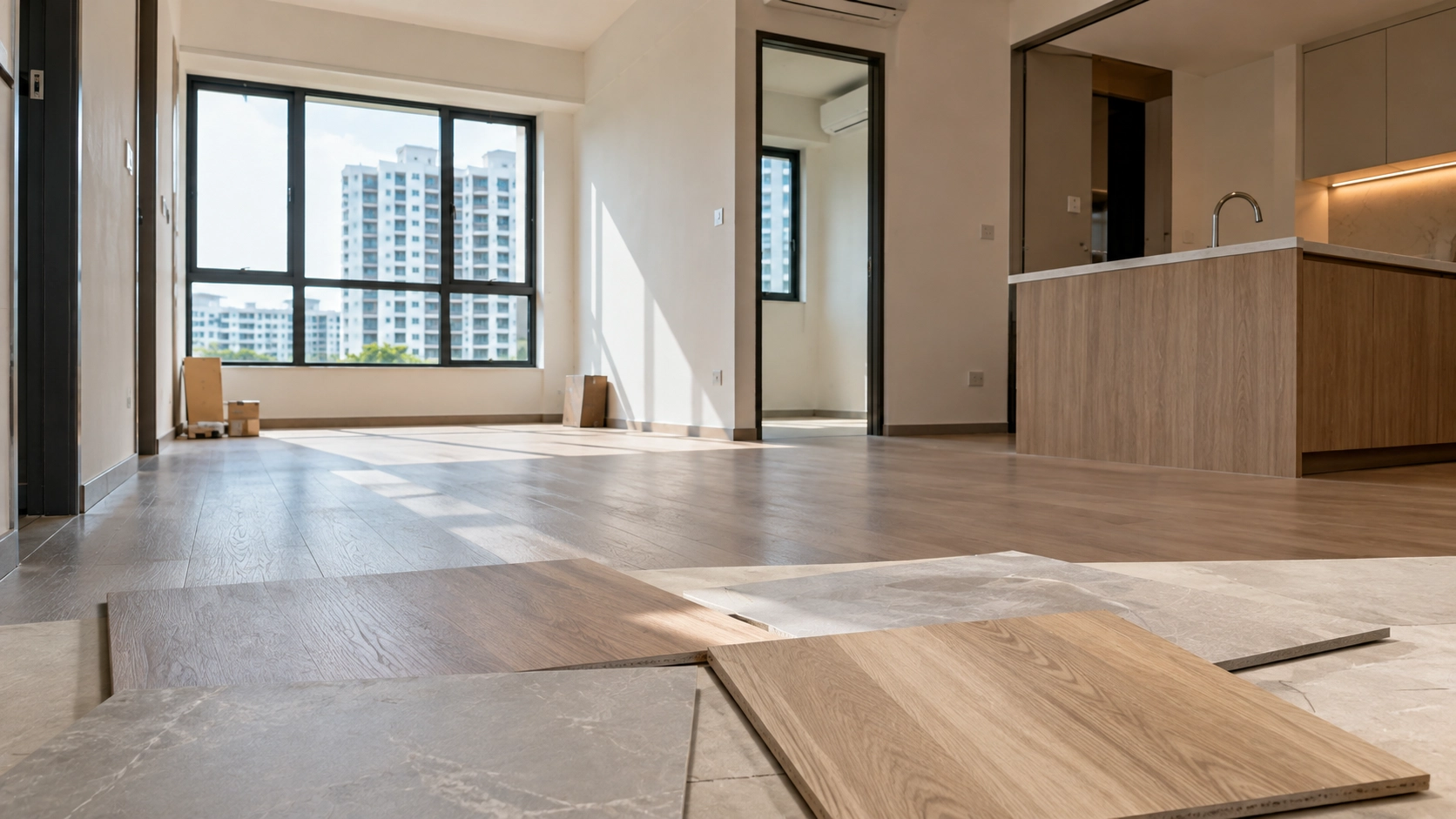
Luxury vinyl plank flooring has become the default choice for Singapore BTO flats and it has earned that position for genuine reasons. It is warm underfoot in a way that tiles are not. It absorbs sound better than hard tile. It handles Singapore’s humidity without warping or swelling. It comes in finishes that replicate timber grain convincingly enough that visitors frequently assume it is real wood. And it costs 40 to 60 percent less than engineered timber for comparable visual quality.
The installation process for a vinyl overlay on BTO tiles is clean and relatively quick. The existing tile surface needs to be flat and well-bonded. The vinyl planks click together and float over the substrate without adhesive, which means they can theoretically be replaced if a section is damaged. The finished floor height increases by approximately 5 to 8mm, which is worth confirming against your door clearances before proceeding.
What to look for in a vinyl plank product: a wear layer of at least 0.3mm for residential use, 0.5mm for areas with heavy foot traffic. Thinner wear layers scratch through faster. Empire Works’ HDB BTO Basic with Flooring Package includes vinyl flooring as part of a complete BTO move-in scope.
Engineered Timber: When the Real Thing Is Worth It
Engineered timber is genuine wood on the surface with a plywood core structure beneath. It looks, feels and smells like real timber because the top layer is real timber. It can be lightly sanded and refinished once or twice over its lifetime. It ages in a way that vinyl cannot replicate: the grain deepens, minor dents acquire character and the floor develops a patina that is impossible to manufacture.
The cost is significantly higher than vinyl: typically $8 to $18 per square foot installed versus $4 to $8 for quality vinyl. For a 90 sqm BTO flat, that difference is $5,000 to $10,000 on flooring alone. Whether that premium is worth it depends on how long you intend to stay, how much the feel of genuine timber matters to you and whether your budget accommodates it without compromising on things that have more structural importance.
Avoid solid timber for Singapore conditions. Solid timber expands and contracts with humidity changes and Singapore’s climate pushes those changes harder than most. Gaps appear between boards. Cupping and warping are real risks. Engineered timber handles the conditions far better because the plywood core is dimensionally stable.
Keeping the Original Tiles: When It Makes Sense
Not everyone needs to change the BTO flooring. If the existing homogeneous tiles are in good condition and you are comfortable with the look, keeping them and putting the flooring budget toward carpentry or kitchen work is entirely reasonable. Tiles are genuinely durable, easy to clean and cool underfoot, which is a meaningful benefit in Singapore’s heat.
If you keep the tiles but find the look dated, grout replacement can do more than most homeowners expect. Old grey grout regrouted with fresh light grey or a contrasting charcoal can transform the visual quality of the same tile surface. Our epoxy grouting service uses stain-resistant epoxy grout that does not discolour over time.
Which Rooms Get Which Flooring
A common and practical approach in BTO renovations is to use different flooring types by zone. Vinyl in the living room and bedrooms for warmth and comfort underfoot. Original or new tiles retained in the kitchen and bathrooms where moisture resistance outweighs any warmth benefit. This hybrid approach captures the best quality of each material where it matters most without the cost of replacing every square metre.
Our full HDB flooring guide covers all options including tile selection for wet areas alongside vinyl and timber considerations. For the broader BTO renovation picture, our BTO renovation tips guide covers the full sequence from key collection to move-in. Contact Empire Works for a free site visit and flooring recommendation for your specific flat.