The Day You’ve Been Waiting For — Now What?
Key collection day for an HDB flat is one of the most exciting milestones in Singapore adult life. You’ve waited years (in the case of a BTO), handed over a significant sum, and finally — the keys are in your hand. And then the slightly overwhelming question: what happens now, and in what order?
The period between key collection and move-in is where a lot of new homeowners feel the most lost. Here’s a clear, honest timeline of what to expect and what to do at each stage.
Week 1–2: Inspection and Documentation
Before any contractor sets foot in your flat, do a thorough inspection and document everything. Photograph every room, every wall, every surface — with timestamps. This serves two purposes: it establishes the baseline condition of the flat for any future defect claims, and it helps your contractor understand the existing conditions before preparing a quotation.
For new BTO flats, HDB provides a defects inspection period where you can raise defects (cracks, fitting issues, waterproofing concerns) that HDB or the developer is responsible for fixing. Do this before renovation begins — defects rectified under warranty cost you nothing. Defects discovered after your contractor has begun work are harder to assign responsibility for.
For resale flats, this inspection period is your own due diligence. Our resale HDB renovation checklist covers what to look for in detail.
Week 2–4: Design and Quotation Phase
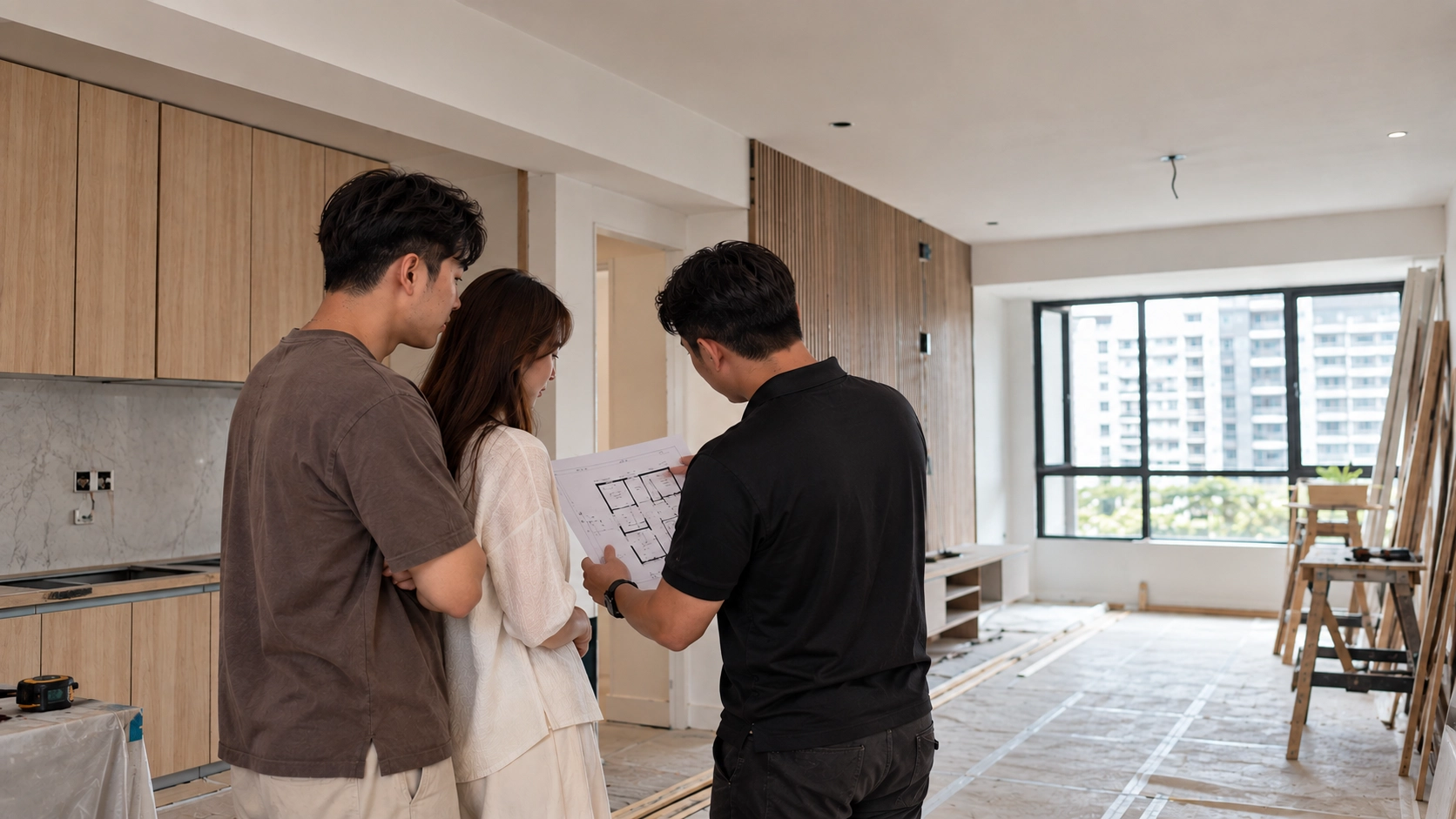
Engage your contractor or interior designer. Share your floor plan, your inspiration images, and your budget. A good contractor will visit the site before preparing a quotation — measurements and site conditions matter for accurate pricing.
Get at least three quotations. Compare them on scope (not just price) — ensure each quote covers the same works and materials. Our renovation quotation guide explains exactly what to look for. When you’ve selected your contractor, have a detailed scope-of-works document signed before any work begins.
This is also when you finalise your design decisions: layout, tile selections, carpentry specifications, paint colours, and material finishes. Changes made after work has started are significantly more expensive.
Week 4–6: Permit Application
Your contractor applies for the HDB renovation permit. This is mandatory for most renovation works in an HDB flat — hacking, plumbing changes, electrical modifications, and structural alterations all require approval. Processing typically takes 3–7 working days. Work cannot legally begin before the permit is approved. Our HDB renovation permit guide covers what requires a permit and the application process in full.
Use this waiting period productively: order tiles (which often have lead times), confirm appliance and fitting selections, and finalise carpentry specifications.
Week 6–10: Wet Works Phase
Once the permit is approved, the renovation begins with wet works — hacking, waterproofing, screeding, and tiling. This is the messiest and noisiest phase. If you haven’t moved in yet, now is the time to ensure the flat is empty and access is arranged for your contractor.
Waterproofing must cure before tiling begins — typically 24–48 hours. Screed needs 3–7 days depending on thickness. Don’t let a contractor rush these cure times. The full wet works phase for an average HDB flat (including bathrooms and kitchen) typically takes 3–5 weeks.
Week 10–14: Dry Works Phase
With wet works complete and cured, the dry works begin. This includes:
- False ceiling installation and boarding
- Carpentry — kitchen cabinets, wardrobes, TV console, and other built-ins
- Painting
- Electrical final fix — switches, sockets, and light fittings mounted
- Plumbing final fix — sanitary ware, taps, and shower fittings installed
This phase is less disruptive day to day but still requires the flat to be empty for much of the work. Carpentry and painting in particular need a clean, dust-free environment.
Week 14–16: Flooring, Finishing, and Snagging
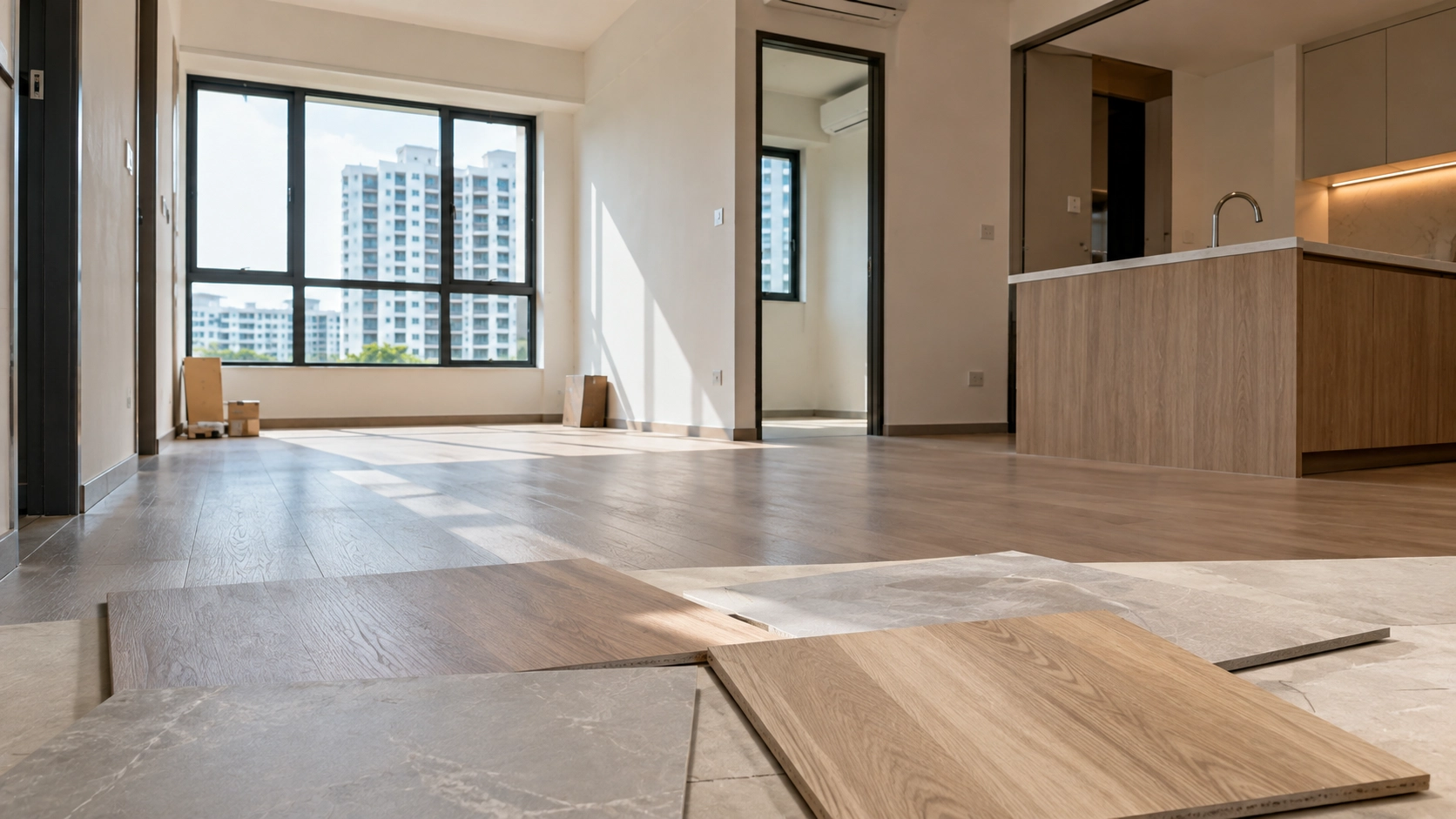
Vinyl or timber flooring overlay (if included) goes in near the end of the dry works phase — after carpentry is installed but before final accessories. Then comes the snagging phase: a thorough walkthrough with your contractor where every item is checked against the agreed scope. Touch-ups are done, accessories are fitted, and the flat is cleaned.
Don’t skip the snagging process. It’s your opportunity to identify and have rectified anything that doesn’t meet the agreed standard — while the contractor is still on-site and contractually responsible.
Week 16–18: Defects Liability Period
A legitimate renovation contract includes a defects liability period — typically 6–12 months after handover — during which the contractor is responsible for rectifying any defects that emerge from their workmanship. Keep a record of everything you notice in the months after moving in and raise items promptly.
Start Planning Early, Move In Confidently
The total timeline from key collection to move-in for an average HDB renovation is typically 3–5 months. Planning early — engaging your contractor, finalising selections, and applying for permits — compresses this where possible. Empire Works manages the full timeline for you, from first consultation to final handover, with full transparency at every stage. Contact us to get started, or explore our renovation packages to understand what a complete renovation typically involves.