

Tiles: The Most Permanent Decision in Your Renovation
Furniture can be replaced. Paint can be redone. But tiles — once laid with adhesive and grouted into place — are essentially permanent unless you’re prepared for the cost and disruption of hacking. This makes tile selection one of the most consequential decisions in any HDB renovation, and one that’s worth spending real time on before your contractor orders anything.
Here’s what you need to know, room by room.
Understanding Tile Types
Before getting into specific rooms, it helps to understand the main categories:
- Homogeneous tiles: The most common tile in Singapore HDB flats. Made from compressed clay fired at high temperatures, the colour and pattern runs all the way through — so chips are less visible. Durable, cost-effective, and available in a huge range of finishes.
- Porcelain tiles: A denser, less porous version of ceramic. Excellent for high-moisture areas and high-traffic floors. Often used to mimic natural materials like marble, concrete, and timber.
- Natural stone (marble, granite, slate): Beautiful and unique but high maintenance in Singapore’s humidity. Marble in particular is porous and stains easily. Requires regular sealing.
- Mosaic tiles: Small tiles (usually 2.5cm x 2.5cm to 10cm x 10cm) on a mesh backing. Used for feature walls, shower niches, and decorative accents rather than large floor areas.
- Subway tiles: Rectangular tiles (typically 75mm x 150mm or 100mm x 200mm) in a brick-lay pattern. Timeless, versatile, and work in almost every aesthetic from classic to contemporary.
Bathroom Tiles: Function First
The bathroom is where tile decisions have the most functional implications. The non-negotiables:
- Floor tiles must be non-slip: HDB and safety standards require a minimum slip-resistance rating of R10 (tested dry) for bathroom floors. R11 is better for wet shower areas. Check the rating on any tile you’re considering for the floor.
- Smaller tiles on shower floors: More grout lines mean more grip. 10cm x 10cm hexagon tiles or 5cm x 5cm mosaics are popular for shower floors precisely because they drain well and provide more surface texture.
- Wall tiles can be larger: For bathroom walls, large-format tiles (60cm x 120cm or even 90cm x 180cm) create a luxurious feel with minimal grout lines. They make the space look cleaner and more expensive.
- Match floor and wall tones: In a small Singapore bathroom, choosing tiles with very different tones for floor and wall makes the space feel fragmented. A consistent palette makes it feel more cohesive and spacious.
Kitchen Tiles: Durability Over Drama
Kitchen tiles — especially behind the hob — take constant heat, grease, and cleaning. Here, function genuinely has to lead:
- Backsplash tiles: Must be easy to clean. Smooth, glazed tiles with minimal texture are easier to wipe down than highly textured or porous materials. Tempered glass, large porcelain, and standard glazed ceramic all work well here.
- Kitchen floor tiles: Choose a tile with some texture (light satin rather than high-gloss polish) so it doesn’t become a slip hazard when wet. Rectified tiles with thin grout lines are easier to mop.
- Avoid white grout in the kitchen: White grout on kitchen floors discolours quickly. A grey or beige grout is far more forgiving in a cooking environment. Even better — our epoxy grouting service provides grout that is stain-resistant and doesn’t discolour over time.
Living Room Tiles: The Aesthetic Decision
If you’re tiling the living room rather than going with vinyl or timber flooring, the aesthetic has more freedom than in wet areas. A few considerations:
- Larger tiles make the room look bigger: 60cm x 60cm or 80cm x 80cm tiles with thin grout lines visually expand the floor plane. 30cm x 30cm tiles make a space feel busier.
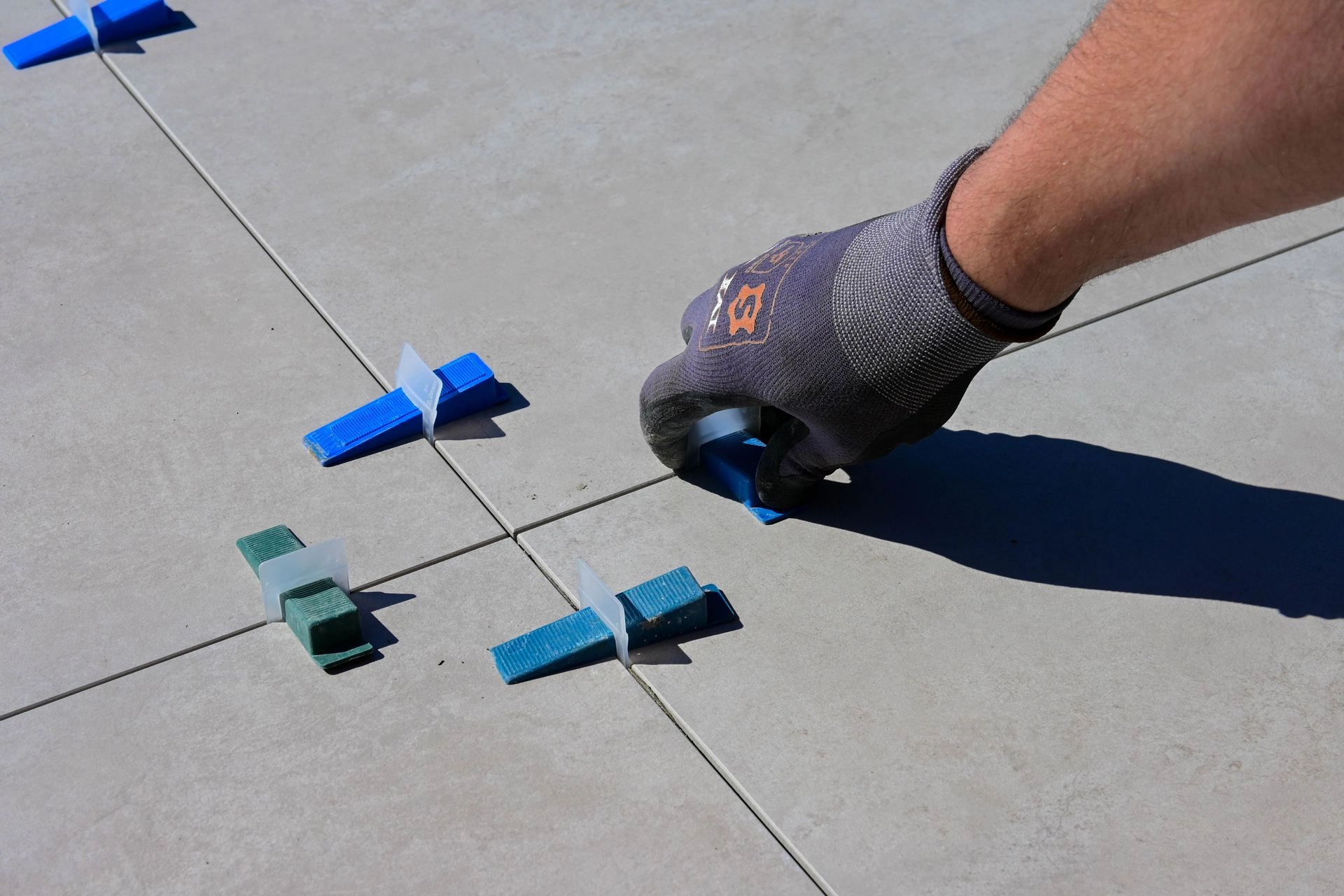
- Rectified tiles for large format: Large tiles require a very flat substrate and precise laying. Use rectified tiles (precision-cut with consistent edges) for any tile above 60cm to avoid lippage (uneven tile edges).
- Consider the grout colour as part of the design: Matching grout to the tile creates a seamless look. Contrasting grout (classic for black-and-white geometric tiles) creates a graphic pattern effect.
Tile Layout Patterns
How you lay tiles affects how a room feels as much as which tile you choose. Common patterns and their effects:
- Straight grid: Clean and contemporary. Works well with large format tiles.
- Brick/offset (running bond): A classic pattern that feels slightly softer and more informal than a grid. Standard for subway tiles.
- Herringbone: Dynamic and interesting, adds visual energy. Works well in bathrooms and as kitchen backsplash.
- Diagonal/diamond: Visually expands a narrow room by drawing the eye to the corners. Often used in corridors and small bathrooms.
Get the Tiling Right From the Start
Empire Works’ tiling contractors work with all tile types and can advise you on selection, layout, and grouting options before your order is placed. We also handle the complete waterproofing preparation before any tile is laid. Get in touch to discuss your tiling scope, or review our flooring guide if you’re also considering vinyl or timber for other areas.


