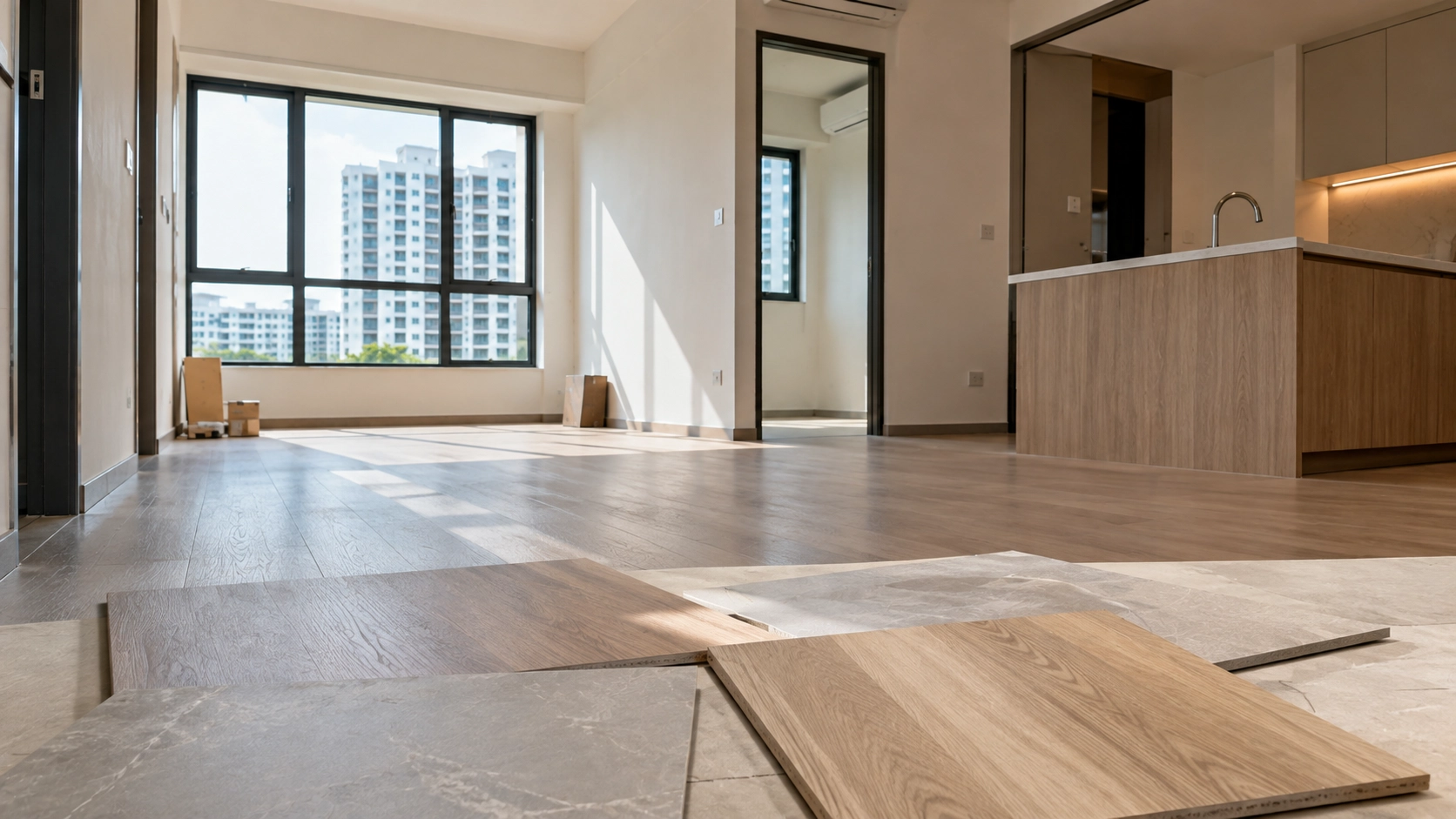
Tiles Are the Most Permanent Decision in Any Bathroom Renovation
You can repaint a bathroom. You can swap out fittings. You can change the lighting. But tiles are with you until the next renovation. In Singapore’s HDB bathrooms, that could easily mean ten to fifteen years of looking at the same floor and wall surface every morning. Getting the tile selection right matters more than most homeowners give it credit for during the excitement of renovation planning.
Here is a practical breakdown of everything that actually affects the decision.
The Non-Negotiable: Floor Tile Slip Resistance
Before anything else about aesthetics, the HDB bathroom floor tile must meet a minimum slip resistance rating. The standard you want is R10 or higher for dry-rated slip resistance, with R11 recommended for the shower floor where the surface will be wet continuously.
High-gloss tiles look striking in a showroom. On a wet bathroom floor they are a genuine safety risk. Satin or matte finishes provide grip without sacrificing the clean look that most homeowners want. If you want the marble or terrazzo aesthetic, look for a honed rather than polished finish. It keeps the visual quality while meeting the safety requirement.
Floor Tile Size: Bigger Is Not Always Better
The trend toward large-format tiles (600mm x 600mm and above) has made its way into Singapore bathroom renovations and for good reason. Fewer grout lines make a small bathroom feel cleaner and more expansive. A 600mm x 1200mm tile on a bathroom floor reads as genuinely luxurious.
The catch is execution. Large format tiles require a perfectly flat substrate. Any unevenness in the screed causes hollow spots under the tile and leads to cracking over time. Large tiles also require skilled tiling to avoid lippage at the joints, where the edge of one tile sits higher than the adjacent one. This is more likely with larger tiles and is a cosmetic and practical problem once it appears.
For smaller HDB bathrooms under 5 sqm, a 300mm x 600mm or 400mm x 800mm tile is often a better proportion. It still gives the clean-line look without demanding the absolutely flat substrate that 600mm x 1200mm tiles require.
Wall Tiles: Height and Pattern Both Matter
For bathroom wall tiles, the key decision is how high to tile. Full-height tiling to the ceiling is the most practical option for Singapore’s humidity, particularly in shower areas where steam rises and condensation forms on untiled plaster surfaces over time. Full-height tiling is also the easiest to clean and looks more resolved as a design decision.
Half-height tiling (600mm to 1,200mm up the wall) with a painted plaster finish above was popular in older HDB renovations and still has its advocates. It is cheaper because you use less tile. The painted plaster section does require repainting over time and is more susceptible to moisture damage near the shower.
For tile patterns, the two most popular layouts in Singapore HDB bathrooms right now are stacked vertical (a modern, elongating pattern that makes walls look taller) and herringbone (more visually active, works best as a feature panel rather than an entire wall). Standard grid and brick patterns remain reliable choices that do not date quickly.
Grout: The Detail That Ruins Everything When Wrong
The grout colour and type are not finishing details. They are part of the tile design and they affect both the look and the long-term maintenance burden significantly.
White cement grout looks clean on the day of installation and then slowly discolours in a bathroom environment. In a toilet that gets daily use, white grout near the floor and shower is a constant cleaning challenge. Light grey or warm grey grout conceals far more than white while still maintaining a clean appearance.
Epoxy grout is the better choice for bathroom applications. It is non-porous, does not absorb stains or moisture and does not discolour over years of use. It costs more than cement grout but the maintenance saving over a decade is significant. Our epoxy grouting service is available as part of any tiling project.
Matching Your Tiles Across Floor and Wall
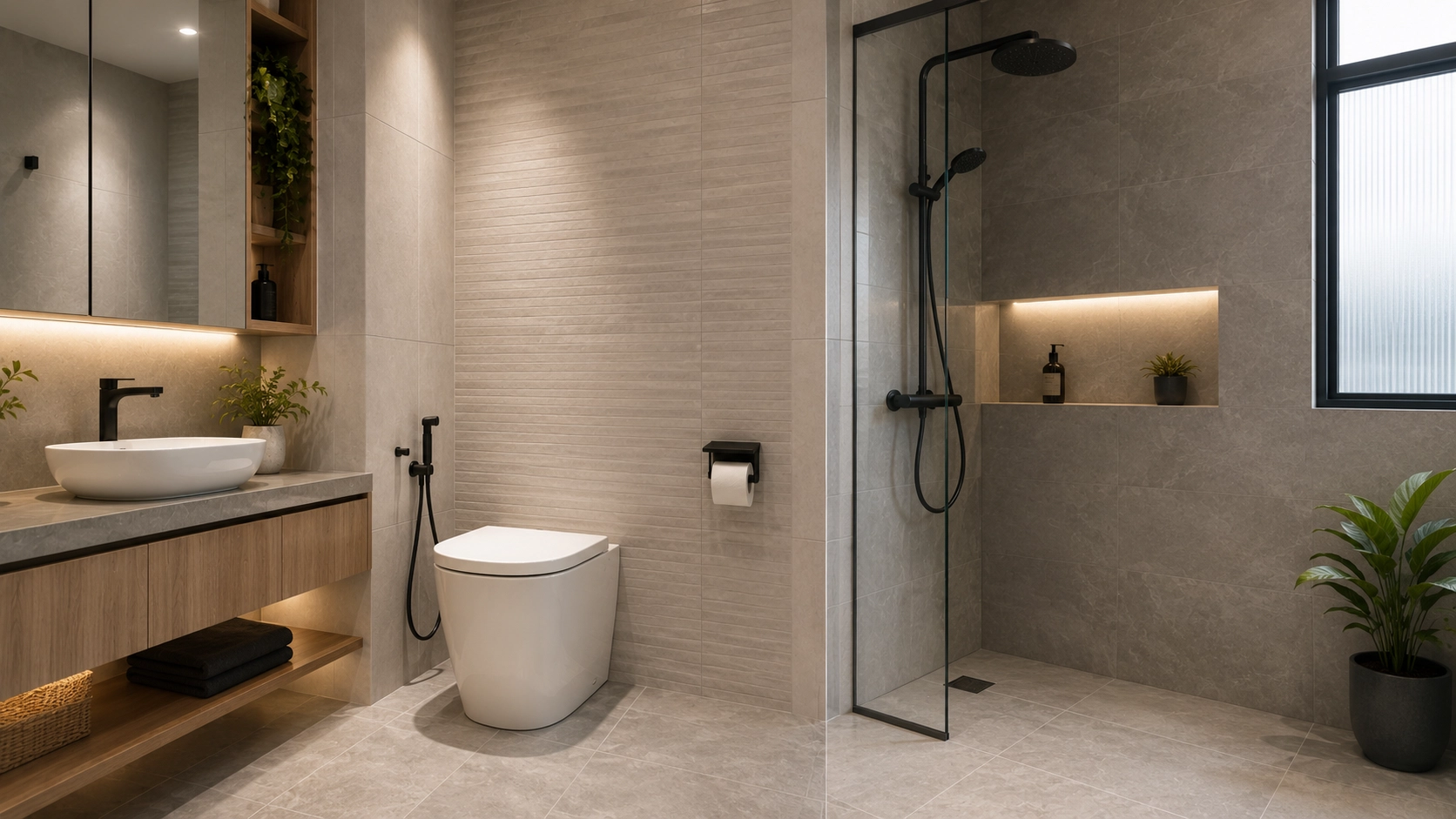
A small Singapore bathroom typically benefits from keeping the floor and wall tiles in the same tonal family rather than creating strong contrast between the two. Strong contrast between floor and wall colours can make an already compact space feel visually fragmented. A consistent palette, perhaps with texture or format differences between floor and wall rather than strong colour differences, creates a more cohesive and spacious result.
One common approach that works well: use the same tile on both floor and wall in a lighter or darker value, with the floor tile being slightly more textured for slip resistance and the wall tile smoother and more reflective to bounce light. The relationship between the two reads as intentional without requiring a design degree to execute.
For the full picture of what a HDB toilet renovation involves beyond the tiles, our toilet renovation guide covers overlay versus full hack decisions and cost ranges. Empire Works’ tiling contractors handle floor and wall tiling with proper waterproofing preparation as a single integrated scope. Get in touch for a free quotation.