Colour in Feng Shui Is Not Superstition. It Is Energy Management.
There is a version of feng shui colour advice that is disconnected from real life: slap red on the southeast wall and your finances will improve. That is not what this guide is about. The more grounded and useful version of feng shui colour theory is rooted in how different colours affect mood, how they interact with natural light and how they create or dissipate a sense of energy in a room. When you understand it that way, the advice becomes practical rather than mystical.
Here is a room-by-room breakdown that works in real Singapore homes.
The Five Elements and Their Colours: A Quick Reference
Feng shui colour advice is built on the five element system. Each element governs a different type of energy and is associated with specific colours:
- Wood: Green, teal, blue-green. Growth, forward movement, health.
- Fire: Red, orange, bright purple, strong pink. Passion, recognition, social energy.
- Earth: Yellow, beige, sandy brown, terracotta. Stability, nourishment, relationships.
- Metal: White, grey, silver, light gold. Clarity, precision, order.
- Water: Dark blue, black, charcoal, dark grey. Wisdom, career, depth of thought.
The goal is not to use only one element but to understand which elements support the function of each room and choose colours that reinforce rather than work against that energy.
Living Room: Welcoming and Grounded
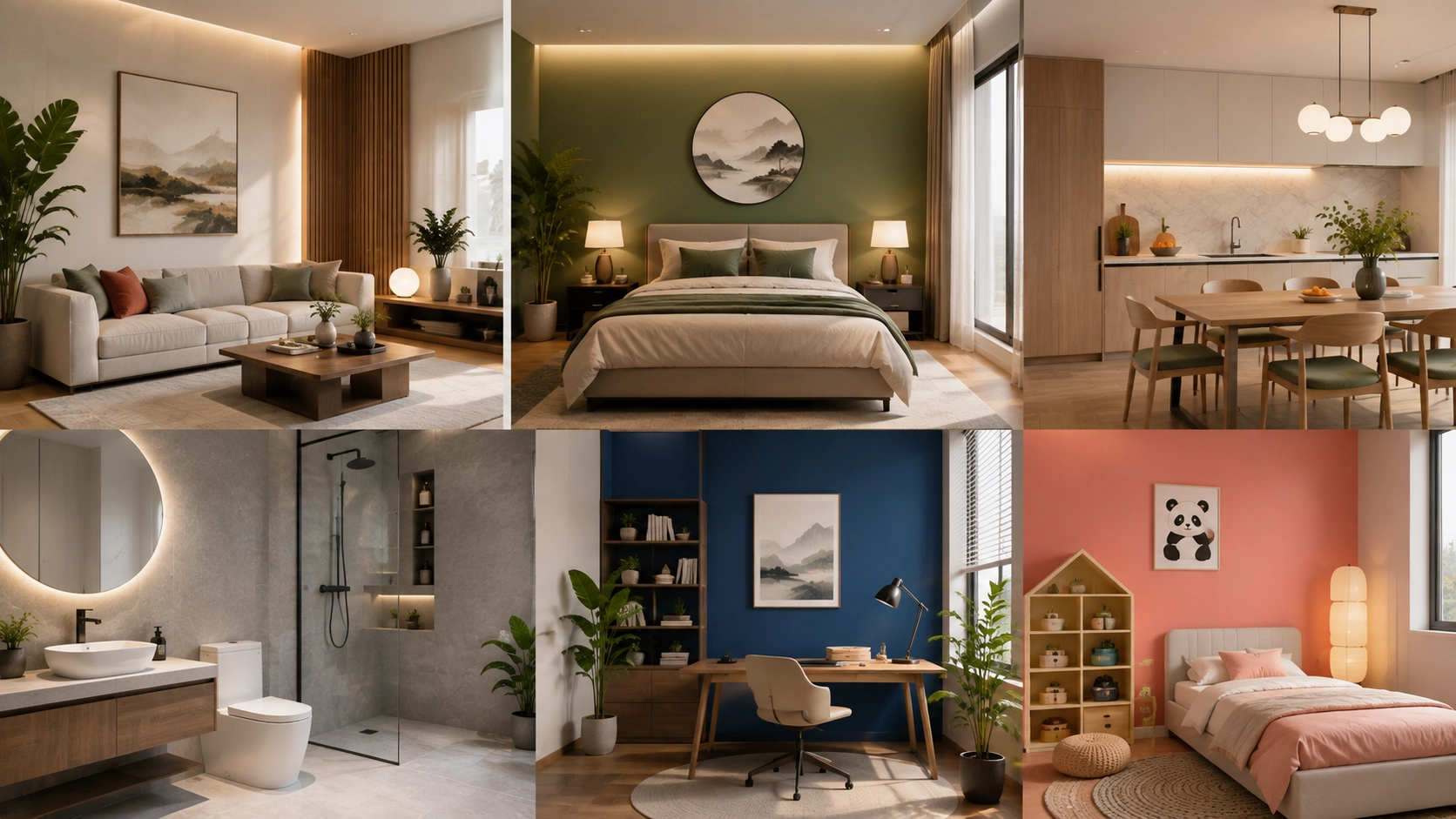
The living room in feng shui needs to support social interaction and family harmony. Earth element tones, warm whites, sandy beige and light terracotta, create the grounded, welcoming energy this space calls for. A touch of wood element in the form of soft green or sage through accent walls or soft furnishings adds vitality without tipping the balance into excessive activity.
Avoid painting the entire living room in strong fire element colours (pure red, bright orange) unless you genuinely want a highly stimulating space. These work as accents, not as the dominant tone. Our HDB paint colour guide covers how Singapore’s varying natural light conditions affect how these tones read in practice.
Master Bedroom: Calm, Restorative and Connected
The bedroom governs rest, health and relationships. Earth and wood element tones work best here: warm greige, muted sage green, dusty terracotta and soft taupe all support the restful, restorative energy the bedroom needs. For couples, pairing warm tones on both sides of the bed, equal bedside tables in the same colour, reinforces the relationship energy symbolically.
Water element tones (deep blue, charcoal, black) can work in the bedroom for homeowners who find these calming. The key is that they should feel enveloping rather than cold. Warm charcoal or slate blue works. Bright cool blue or stark black does not.
Strong metal element (pure white, bright silver) is the one to approach carefully in the bedroom. In large quantities it can feel clinical and emotionally disconnected, which is the opposite of what the bedroom should support. Off-white or warm white is a better default than pure bright white. Our feng shui bedroom guide covers placement and energy considerations alongside colour.
Kitchen: Clean Energy, Not Chaotic
The kitchen is a fire element space by nature because of the cooking activity and the stove. Adding more fire element through strong red or orange walls amplifies an already active energy to the point of creating restlessness and conflict. The better approach is to balance fire with either metal element (clean white, light grey) which the fire element creates in the productive cycle, or earth element (warm beige, soft yellow) which fire nourishes.
Avoid water element colours (dark blue, black, dark grey) as the dominant kitchen tone. Water and fire are in direct opposition in the five element cycle and a water-dominant kitchen creates an energy conflict that in feng shui terms affects the health and finances of the household. Our feng shui kitchen guide covers stove placement and layout alongside colour.
Bathroom: Clean, Light and Draining Energy Well
The bathroom is associated with water element and with the release and drainage of energy. Feng shui recommends keeping bathroom colours clean, light and uncomplicated. White, light grey, pale blue and soft sage green all work well. These tones support cleanliness and clarity while keeping the space feeling open rather than oppressive.
Avoid dark, heavy colours in bathrooms, particularly small HDB bathrooms. Dark colours in an already compact, humid space create a feeling of stagnant, heavy energy that is the opposite of what the bathroom should produce.
Study or Home Office: Sharp and Forward-Moving
The study benefits from colours that support focus, mental clarity and career energy. Wood element tones, soft green, pale teal, support creativity and growth. Metal element tones, clean white, light grey, support precision and analytical thinking. Water element, a restrained dark blue or navy accent, supports depth of thought and career flow.
Avoid earth-heavy tones (strong yellow, deep terracotta) as the dominant study colour. Earth energy is stabilising but can tip into sluggishness when it dominates a space meant for active mental work. Our feng shui study guide covers desk placement, storage and lighting alongside colour.
Putting It Together: The Whole Home
The best feng shui colour plan for a Singapore HDB flat reads as a coherent whole rather than a patchwork of unrelated rooms. Choose a dominant neutral that runs through the shared spaces, then let the private rooms have their own character within the same tonal family. The transitions between rooms should feel intentional, not jarring.
For the broader feng shui picture across your whole home, our feng shui home design guide covers energy flow, room placement and material choices alongside colour. Talk to us about how your renovation design and feng shui considerations can work together from the start.