The Living Room Is Where Scandinavian Design Either Works or Exposes Itself
A Scandinavian bedroom is forgiving. Keep it simple, use good linen and warm timber and it reads as intentional even if the execution is loose. The living room is harder. It is larger, it contains more elements and it gets used in more ways throughout the day. A surface-level Scandi living room, the one with white walls, a grey sofa and a fiddle-leaf fig in the corner, looks fine but does not feel like anything in particular.
The version that actually works has a different quality to it. Warmer, more layered, more considered. Here is how to get there in an HDB flat.
The Sofa: Where Most People Start Wrong
The dominant piece of furniture in any living room is the sofa and in a Scandinavian-inspired space, the sofa carries significant visual weight. The temptation is to go grey because grey feels neutral and Scandi. The problem is that cool grey in Singapore’s natural light reads flat and slightly cold, particularly in flats that face north or northeast and receive diffused rather than warm afternoon light.
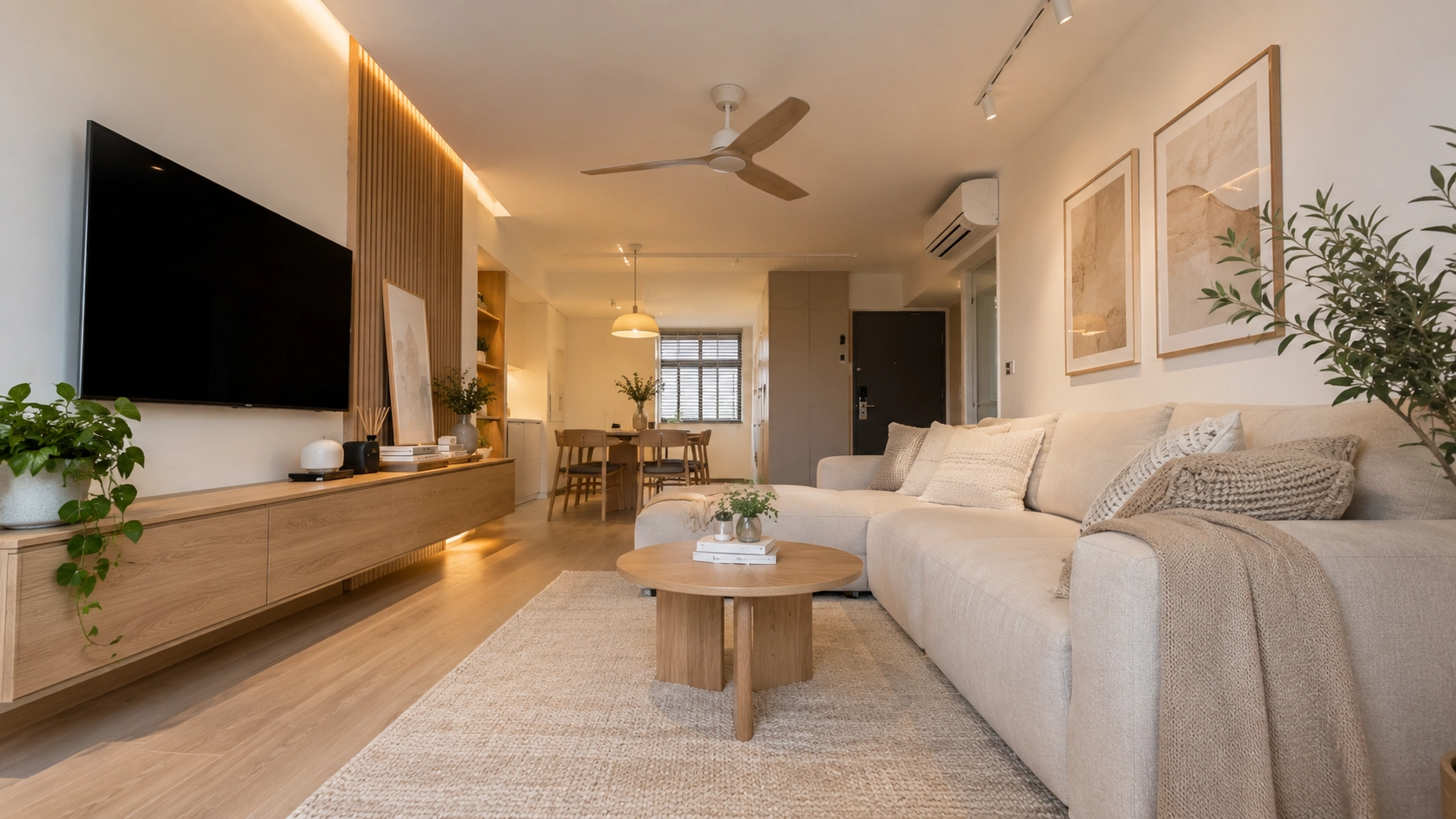
Warm-toned upholstery works better. Oatmeal, cream, warm taupe, dusty terracotta or a muted sage green all sit within the Scandinavian palette while adding warmth that cool grey does not provide. The texture of the fabric matters as much as the colour. Boucle, linen and textured weaves add the tactile dimension that makes Scandinavian interiors feel lived-in rather than clinical.
On legs: Scandinavian furniture sits on visible legs rather than resting on a plinth or touching the floor. This keeps the visual floor plane open, makes the room feel airier and is easier to clean under. If your current sofa touches the floor, swapping to a sofa on legs is one of the highest-impact single changes you can make to the Scandi quality of the room.
The TV Wall Without the Generic Feature Wall
Almost every Singapore HDB living room renovation involves a TV feature wall. In a Scandinavian interior the challenge is making it feel considered rather than like a standard renovation package item. A few approaches that work well:
Timber slat panels in a light ash or pale oak tone create warmth and texture without visual noise. The TV sits flush-mounted within the slat panel and cables run concealed behind the structure. Flanking shelving in the same timber material adds storage without breaking the rhythm of the wall.
A simpler approach that is underused in Singapore: a limewash or clay-textured paint finish on the feature wall behind the TV. No carpentry. Just a wall with genuine texture and depth that photographs beautifully and costs a fraction of a built-in. This is a direction worth discussing with your painting contractors before defaulting to timber or stone-look panels.
Colour: Warmer Than You Think
The stereotype of Scandinavian interiors as white and white alone comes from its northern European context where walls needed to be as light-reflective as possible. In Singapore that logic does not apply in the same way. Warm whites, off-whites and very pale warm tones work better than pure bright white in most HDB living rooms.
Where Scandinavian design uses colour it tends toward muted tones rather than saturated ones. A dusty sage green accent wall, a terracotta ceramic lamp base, a deep navy throw, these add colour interest without departing from the overall calm palette. Our HDB paint colour guide covers how Singapore’s different flat orientations affect how these tones read in practice.
Rugs: The Most Neglected Element
Singapore HDB living rooms are almost universally under-rugged. A rug in the living room does three things simultaneously: it defines the seating zone visually, it adds warmth underfoot that no amount of good furniture can replicate and it provides acoustic softening that tile and vinyl floors cannot. In a Scandinavian interior, the rug is as important as the sofa.
Size is the most common error. The rug should be large enough for the front legs of all seating furniture to sit on it, at minimum. In a standard HDB living room, a 200cm x 300cm rug is usually the smallest size that works properly. Natural fibre rugs in jute, wool or a wool blend sit in the Scandi tradition and age well in Singapore’s conditions.
Lighting: This Is What Most People Get Wrong
A Scandinavian living room without layered warm lighting is just a white room with a sofa. The lighting is what creates the hygge quality that makes Scandinavian interiors feel so inhabitable in the evening. A single ceiling downlight on full brightness is the opposite of what you want.
Plan for at least three light sources in the living room operating independently: a dimmable overhead circuit, a floor lamp beside the sofa and a secondary light source (table lamp, shelf light or cove) that can operate alone in the evening. Warm white LEDs at 2700 Kelvin are correct. Our HDB lighting design guide covers how to plan this properly during renovation before the ceiling boards go up.
For the broader Scandinavian design context across the whole flat, our Scandinavian interior design guide for Singapore HDB covers materials, colour and carpentry decisions room by room. Contact Empire Works for a free design consultation on your living room renovation.